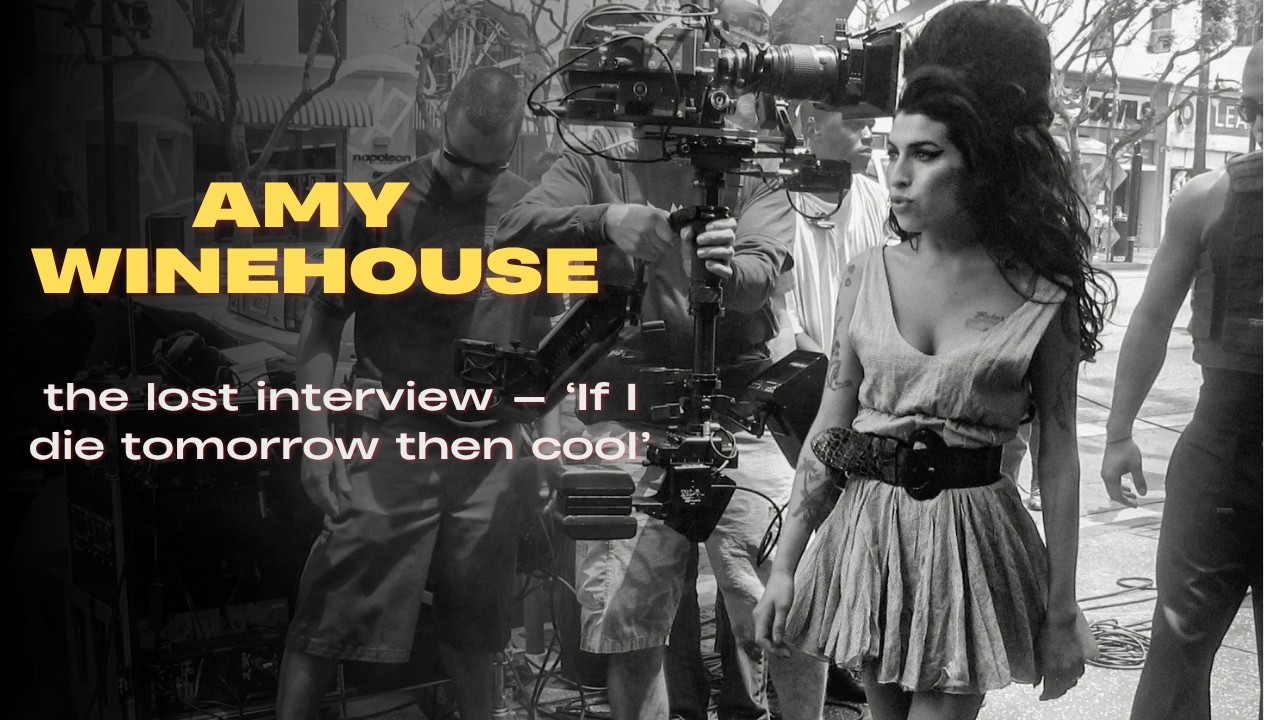
Here is the full piece
Amy Winehouse: the lost interview — ‘If I die tomorrow then cool’
In Los Angeles in 2007, the newly married singer bared all to The Sunday Times Magazine about family, fame, her future — and her love of housework. The story was never published. Until now
Ariel Leve
Saturday October 10 2026, 10.00pm BST, The Sunday Times
It’s May 2007.
I’m sitting with the 23-year-old musician Amy Winehouse in Asia de Cuba, the Philippe Starck-designed restaurant inside the Mondrian Hotel on Sunset Boulevard where every fabulous person in Los Angeles wants to be. Except Amy. She’d rather be with her new husband, Blake Fielder-Civil, 25, whom she married a few days earlier in Miami. He is waiting for her in the lobby.
It’s early for lunch and in this white-on-white setting she’s an outlier in all-black. The furniture has a deliberately exaggerated scale and the Alice in Wonderland proportions make her seem even tinier than usual. It’s a setting that seems calculated to make people feel like impostors but that doesn’t work with Amy. She’s not pretending to be anything she’s not, and right now she’s not pretending to be happy about sitting here with me. This is going to be tough, I think. She’ll co-operate but she’s disengaged. I can feel her counting down until it’s over.
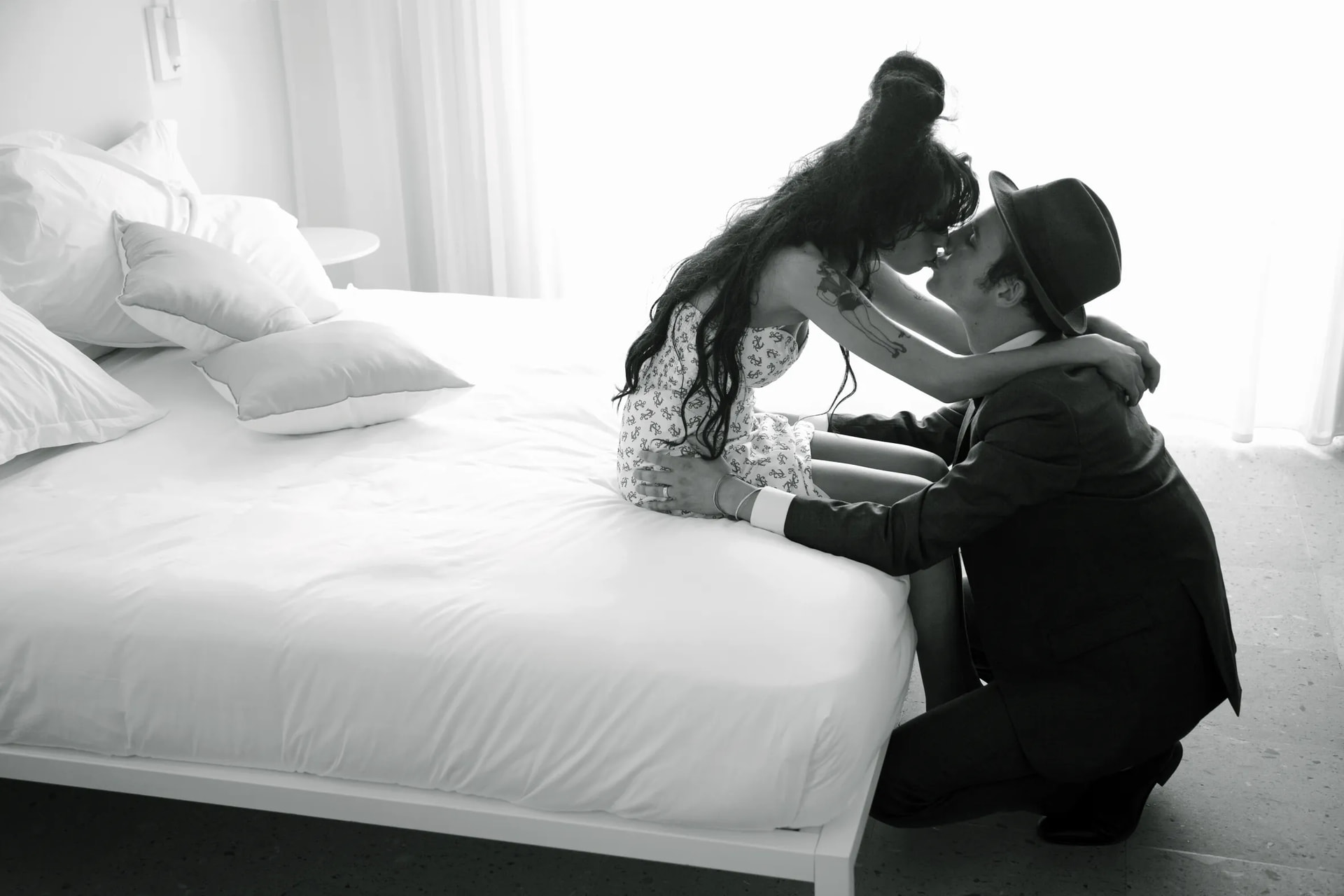
“Hi, guys!” The cheerful waitress has appeared, ready to take our order. Amy’s eyes are locked on the menu. She asks for the ribs then pauses. “What’s better, the salmon or the chicken?” Her voice is soft and languid. A striking contrast to the over-the-top enthusiasm of our waitress.
She orders the barbecued salmon and a side of lobster mash. Then she orders some vegetables as well. And some black beans. They discuss the wine — red or white. “Red would be lovely.” The waitress recommends a pinot noir. “Thank you, darling,” Amy says.
The newlyweds arrived in LA an hour ago and tomorrow she’ll shoot the video for Tears Dry on Their Own, directed by the superstar fashion photographer David LaChapelle. After that she’ll head back to London for the Ivor Novello awards. We begin with a subject she’s keen to talk about: Blake.
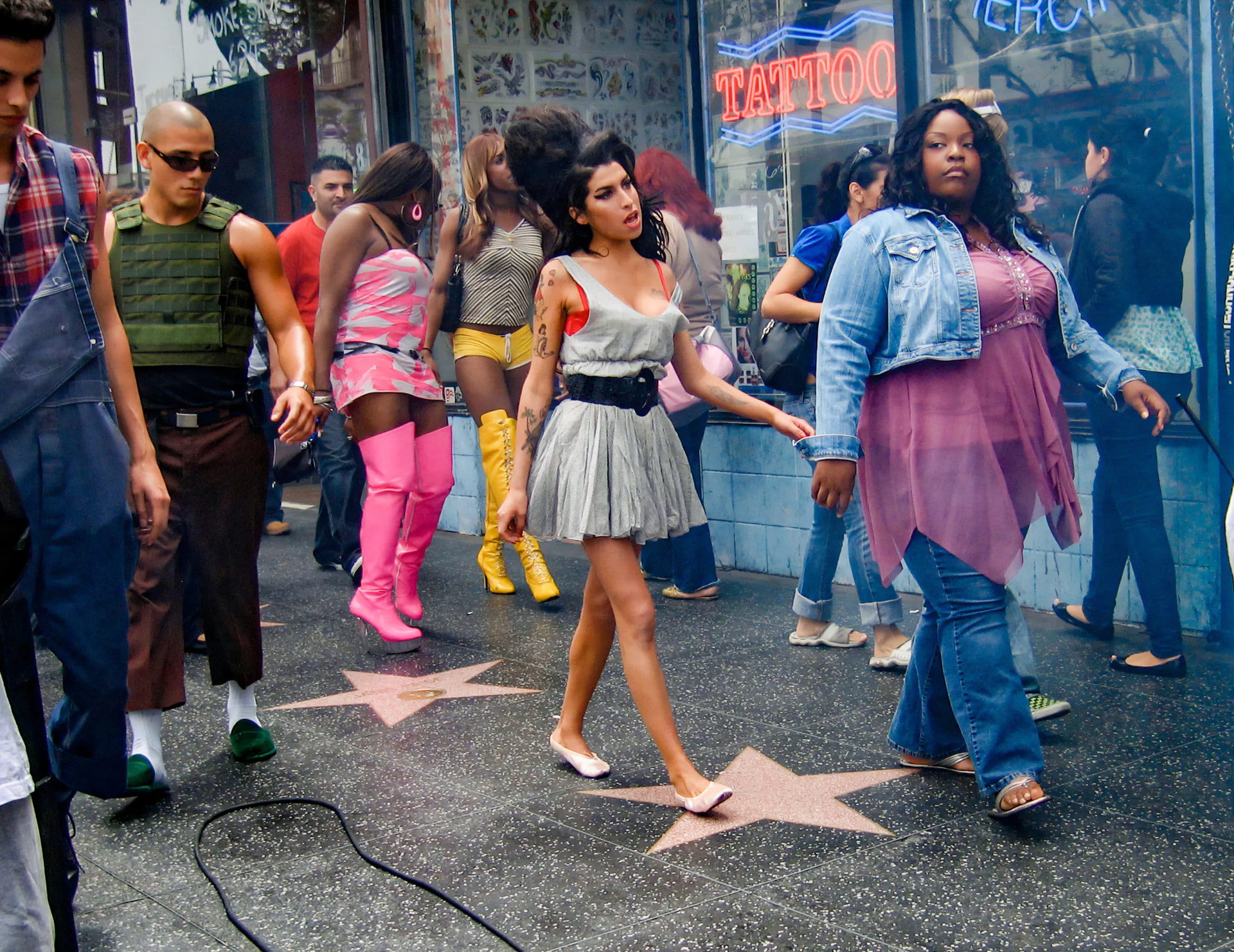
She tells me about the wedding and how it happened. None of their family were there. It was an impulsive decision, she says.
“We literally did it for us. We went to the town hall, and that was it really. It just made sense. We’d been away and I’d done a tour in America, and we just realised we love each other so much and we’re best friends.”
In 2005 Amy was in a pub in Camden, north London, waiting for her turn to play pool. “He came in, put his coin down on the table — he could see when my game was about to come up and he put his coin down on the table in front of me so that he had to win the table off the guy to get to play me. That was really cool. It became apparent at that time … I don’t have the words …”
She struggles to talk about it, but she doesn’t have to. Their turbulent six-month on-and-off love affair, which led to a painful break-up and Blake returning to his previous girlfriend, made him an inadvertent muse. In her despair she wrote Back to Black. Released 20 years ago this month, it is a sui generis masterpiece.

During their separation, they stayed in contact. “When we first met, it wasn’t the right time. We still had an amazing time together and I think we both did everything we could to prove to ourselves that we weren’t in love, but we were. It was too intense, it was too much. We both were scared of it. We were both very young.”
She has a pragmatic tone when she speaks about their reconciliation. “You get to a point when you realise you don’t really want to be with anyone else. It’s, like, why would you ever want to be with anyone else ever, do you know what I mean? When you’re in love with someone.”
“Do you see yourself with him in 30 years?” I ask.
She nods. “I know we’re going to die together.”
“As older people, I hope.”
“Yeah.” She laughs.
I tell her she seems happy.
“I am. Thank you.”
This interview was never written. Until now.
It was supposed to be a cover story for The Sunday Times Magazine, but a week after it took place I got a message from my editor, Robin Morgan, saying he no longer needed the piece. It was the fault of our colleagues down the corridor, Saturday’s Times Magazine, who had bought in an interview with Amy that had recently been published in Rolling Stone magazine in America. As Robin remembers it now: “The Times pulled a clever fast one, which rendered our exclusive roadkill in the race to be first with the news.”
Amy’s record company and management were understandably not best pleased. But I was relieved. I didn’t think there was much in the interview that we didn’t already know. We hadn’t connected.
I didn’t even transcribe the tapes. They went in a box in a drawer.
Then in June this year I received an email from an editor at The Sunday Times I hadn’t heard from for 15 years. She had bumped into Shane O’Neill, Amy’s former PR, who asked her: do you know what ever happened to that interview?
Later that evening, I located the box and dug through my old tapes. Here was Tom Cruise and Arthur Miller and Elton John and Anthony Hopkins. But Amy. Where was Amy?Finally: two 60-minute microcassettes wrapped in a red rubber band. Next I had to locate the tape recorder to play them. It was 1am. I had the machine and a new set of triple-A batteries. I loaded the first tape, took a deep breath and pressed play.
“Can we get some bread?” Amy asks. She tells the waitress she’s starving. We’ve been waiting a while for the food and she replies they don’t serve bread at the table — it’s Latin Asian.
“Do you have some banana chips or anything?”
The waitress hesitates. She tells Amy there’s a lot of food coming and it will be out any second, but if she wants plantain chips she’ll gladly bring them.
“That would be lovely,” Amy says. “Thank you.”
We return to the subject of Blake. He’s a writer, Amy says. Screenplays. “He’s got a brilliant mind. A brilliant mind.”
“What makes him brilliant?” I ask.
“His imagination is amazing. Amazing. The things he thinks of. I mean, I sit there and think of stuff but then I open my mouth and … I ruin stuff, not ruin stuff … but I’m quite thick.”
I tell her she seems pretty thoughtful.
“Yeah, he hates it when I say I’m stupid. He says, ‘Why do you say stuff like that?’ and I say, ‘’Cos I’m thick.’ And he says, ‘Oh shut up. If you’re thick, then I’m a f***ing idiot for marrying you,’ and I was, like …”
She trails off. Back to Black, her second album, has just been certified gold in the US and sold more than a million copies in the UK. I mention that some men would feel threatened if their wife or girlfriend was more successful than them. “Does he feel insecure about being with you?”
With Fielder-Civil at the 2007 Mojo Awards, where Rehab won song of the year
“You’d have to ask him,” she says and shrugs. “I wouldn’t know. He knows that I look up to him so much and I have so much faith in him, and I respect him sooo much.”
What is it you respect?
“I get funny talking about him because he’s not here. He’s just really dignified.”
I begin describing some of the news coverage she’s received and she seems oblivious to it. She doesn’t read that stuff, she says, but Blake does. “Yeah, I don’t really get it. He likes stuff like that, I suppose. He likes it. I’m not really fussed. If there’s stuff about both of us, he wants to see it. I like pictures of us. I don’t care, I don’t mind.”
What about the coverage that isn’t true?
“I think it’s funny. It doesn’t bother me.”
I’m not sure if I believe her. It hasn’t had any effect?
“No, I always say what’s on my mind anyway. I dunno. I’m quite honest about things. I sometimes get funny if I’m asked about Blake but that’s because he’s my baby and I want to protect him. I feel like what we’ve got is sacred. Sacred. I feel like what we’ve got is … ours.”
The first time I listened back to the tapes, it was eerie to hear her voice, be alone in the room with her at 1am, listening to a ghost. I was transported back to that day in LA. She sounded so young. I wrote words down on a notepad: self-aware. Quick-witted. Funny. The quality of the audio was decent but background noise at the restaurant made parts of it hard to hear. But mostly, responses that had not seemed revelatory at the time were now almost unbearably poignant.
The second time I listened, it was to record her onto my iPhone to send the files to The Sunday Times for various videos, podcasts and social media posts. The digital transcription was full of mistakes and missing words.
So I listened for a third time, pausing to transcribe by hand the way I used to do 20 years ago. This time I was struck by how sweet and self-effacing she was. And how much apathy she had towards success. It saturated the conversation.
Amy admitted that when she was a teenager she wanted to be famous. But once it happened, it seems the one thing that wasn’t addictive was the fame and notoriety.
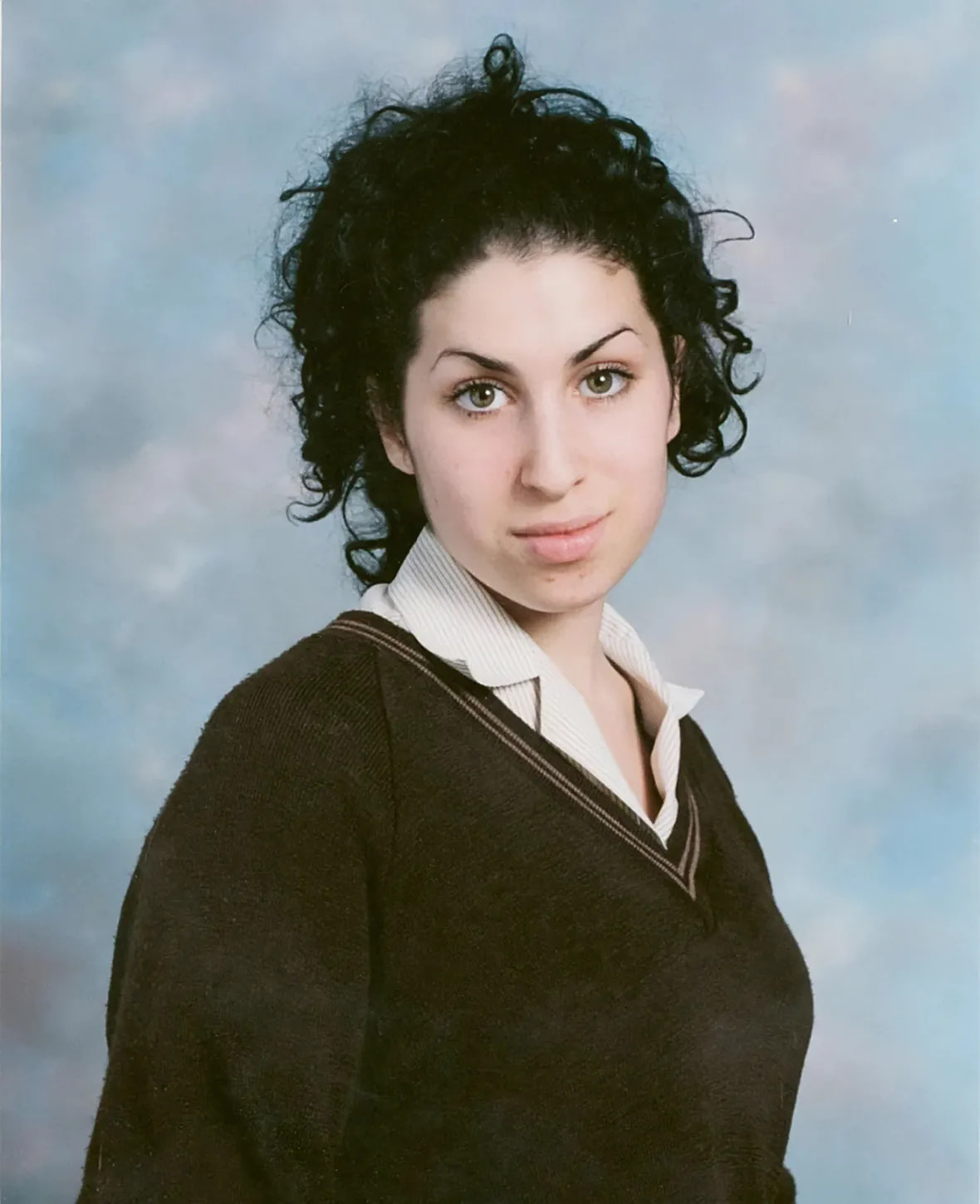
She was discovered at 16 playing in a jazz club in London. Her response was instant when I asked her if that hadn’t happened, would she still be trying to get a record deal, shopping around a demo?
“Nooo,” she said sharply. “No way. Never. I just wouldn’t. I love being able to write music and play music. That’s what’s important to me. Not whether other people like it. Or whether other people hear it. When people come up to me and say, ‘I really like your album,’ I can’t believe they’ve heard it.”
I recalled the way she winced when she said “my career?” as though it were a dirty word.
“Do you think you would ever stop doing this?” I asked.
“I suppose I need to get used to the fact that this is what I do. This is what I’m going to be doing.” She said this with a tone of resignation.
“Could you handle obscurity?”
“Ob-scur-ity?” She sounded amused. “Yes. I’m just a musician, you know. I love looking after people. When I was younger, yeah. The thought of dying without ever making my mark, that was my biggest fear. Dying without making a stamp on things. I know I’m only 23 but …”
She loved making Back to Black. “Yeah, I’m really proud of myself … I just want other people around me to do well. Like my baby … I’ve done well, you know what I mean? I’ve just done an album that I’m really proud of. If I die tomorrow then cool, do you know what I mean?”
There was no grand plan. No vision or goal as to where she wanted to be in ten years. When asked about validation and where she got it from, her reply was touching.
“I’m happiest when I’m cleaning my house and cooking for my friends. I’m so lucky, I can’t even tell you. So lucky.”
“Is there lobster mash coming as well?” Amy’s voice has gone up an octave. She sounds alarmed and apprehensive. The table is full of food. The waitress says she’ll check. Under her breath, Amy whispers, “Please say no.”
Does she still want the black beans, the waitress asks. “Oh my God, I forgot about those.”
Her manners with the waiting staff are kind and appreciative. There’s a steady stream of please and thank you and lovely and brilliant. “I keep forgetting I have more food coming out,” she says when she asks the waitress for salt to put on the ribs. They have a laugh about it and Amy tells her: “I love salt. I crave it all the time.” I get the feeling she would prefer to be hanging out with the waitress rather than with me.
She tells me her dad, Mitch, gets along with Blake, but her mum, Janis, only met him once. “My mum suffers from MS and she lives outside of London.”
Her mum lives in Barnet. “My mum’s an amazing person.” It was a relief when they got the multiple sclerosis diagnosis. “It’s like anything when you know what’s wrong with you — you know you’re not going crazy. I just want my mum to be happy. I was raised well. And when you get to a certain age you start looking after your parents, you know. My mum remarried — well, they’re not married but they’re together. He had two kids the same age as my brother and I.”
They live “at the end of the Tube line” and when I tell her I know where Barnet is, for the first time in nearly an hour she becomes animated.
“Wow. Do you know London? Where are you from?”
“New York.” But I lived in London for six years.
“My mum was born in Brooklyn. Are you sure you don’t want a rib?”
For a minute, we’re connecting. We talk about me being vegetarian. Smoking. Worrying. On a day off she tells me she’ll spend it cleaning. “I dance around my house to music and clean.” She must have a spotless flat. “Not really, I’m never there,” she says.
I tell her she doesn’t seem neurotic. She disagrees.
“I kind of am. I just want everyone around me to be happy. I’ve got to be happy as well, I suppose.”
She tells me I’ll meet Blake tomorrow on the set of the video shoot. “You know Spin magazine? He’s going to be doing behind-the-scenes filming for them.”
Suddenly she is reminded that it has been a while — just over an hour — since she has checked in on Blake. She excuses herself to see where he is. I wait for her to return. Forty-five minutes pass.
Last month I asked Shane O’Neill, Amy’s former PR, where she had gone. The first time I’d met Shane was 20 minutes into my chat with Amy, when he came over, relieved to discover she had turned up, of her own accord, at the allotted time. She’d gone missing before the interview: “No one knew where she was. Everyone was freaking out.”
It was Shane who had been with her during the 45-minute disappearance later on. Amy had found Blake outside in a car, sitting next to Shane, who was in the driver’s seat. She opened the door, sat on Blake’s lap and, with no seatbelt on, said to Shane, “Just drive.” While I sat waiting in the hotel restaurant, the three of them took a tour of Sunset Boulevard.
“Hi, darling. Can we see the dessert menu?” Amy has returned to the table and her mood is upbeat. (I remember it crossing my mind that she may have been vomiting up her lunch. Or maybe she was just high off a hit of Blake.)
“I have a real sweet tooth,” she says. “I love dulce de leche.” She points to the dessert. “I’ll get that one.”
Trying to get things back on track, I ask about the image of her versus the reality. “I don’t really know.” She shrugs.
“The thing is, I am a nice girl but there’s nothing about me that’s written that’s kind of wrong. I mean, I don’t really know all that’s written. I wouldn’t know what the perception of me is because I am me.”
There’s a pause. Her train of thought is not always easy to follow.
“I do stupid things but I can usually justify it, make sense of it in my head and think, ‘Oh, that’s why I did that.’ A while ago I did a gig round my way in Camden. A girl came around after and said, ‘You were really good tonight,’ and I said thank you and gave her a kiss on the cheek, and then she turned around to my boyfriend … Maybe she was just being sweet. I was very defensive. I’m not the world’s most confident person.”
And then, a sigh of relief. All that is behind her.
“I’m in a place in my life now where I’m married and I’ve got an amazing husband. Blake will always look out for me. If someone looked at me funny, Blake would be, like, ‘Do you want me to knock his head in?’ and I’d be, like, ‘No, of course I don’t, no,’ but I’m the same with him.”
Do you think having someone love you like that makes you less insecure?
“I dunno. I mean, I’m not an oil painting. I do the best with what I can do.”
“You kind of are — a Modigliani.”
“Thanks,” she says sweetly, before giving me a suspicious look. “I think?”
The dessert arrives. “I must be on my period or something. You know when your hormones … The way I’m eating, it’s like I’m pregnant.”
“If you were pregnant, what would happen? You want to have children, right?”
“Yeah, of course. We want to have loads of kids. If I was pregnant that would be it. You know I really want some ice cream or just a bite of ice cream …”
She tells me that after lunch she’ll go to the gym and probably do the stationary bike. “Since I’ve been married I haven’t done anything.”
“Well, you’ve only been married three days,” I say.
“Yeah, that’s true.”
Amy’s got some new friends now but her best friends are still her friends from school. “My cousin Lauren and my friend Juliette. And then I’ve got my friend Naomi — we work together. She’s a stylist. I do my own hair and make-up. I get dressed the same every day and I pretty much look the same all the time, but she’s here because I’m doing the video tomorrow.”
What stayed with me after meeting Amy was her desire to find the goodness in people. “I’m quite forgiving,” she said, as our lunch was ending. “I don’t forgive everything. Trust me. But I do see people’s good side. I see it. If someone’s being a dickhead, I don’t think, you’re an idiot. I think, why are you being an idiot? What’s wrong with you?”
We spoke a bit about the film directors she liked — Hitchcock, Billy Wilder, Fellini. And how she avoided reality shows entirely. She’d never seen Pop Idol or American Idol. “God no. I’m pretty much a throwback. I like old stuff. I just find it … it just makes me want to put a fork in my eye. I can’t imagine going on a TV show and being criticised by people. The judges don’t know any better, you know what I mean?”
When I asked about her mental health, she said she had a depressive personality but “I would never take medications. I did it when I was younger.”
As a teenager?
“Yeah … I was on the pill … and I was quite up and down. I went to see a lot of people. Therapy and so on. But I never met anyone that I liked. It’s fine, I’m a musician. You tend to write out the way you feel.”
I asked if she was in therapy now. “No. I wouldn’t do that. I don’t think it’s in me. I think if you have a problem with something and you can’t help yourself, then you can’t be helped.”
It’s not always a matter of willpower, I say.
“I dunno. I’m not against therapy. If something works for you then it works.”
It’s a sunny day on location just off a seedy section of Hollywood Boulevard. I’m on set for the Tears Dry on Their Own shoot. A cluster of vans and trailers have been roped off and extras linger around. Cameras are being set up for the long shot where Amy will be walking, resolute, down the boulevard, with a beehive that looks as though it’s been inflated with helium.
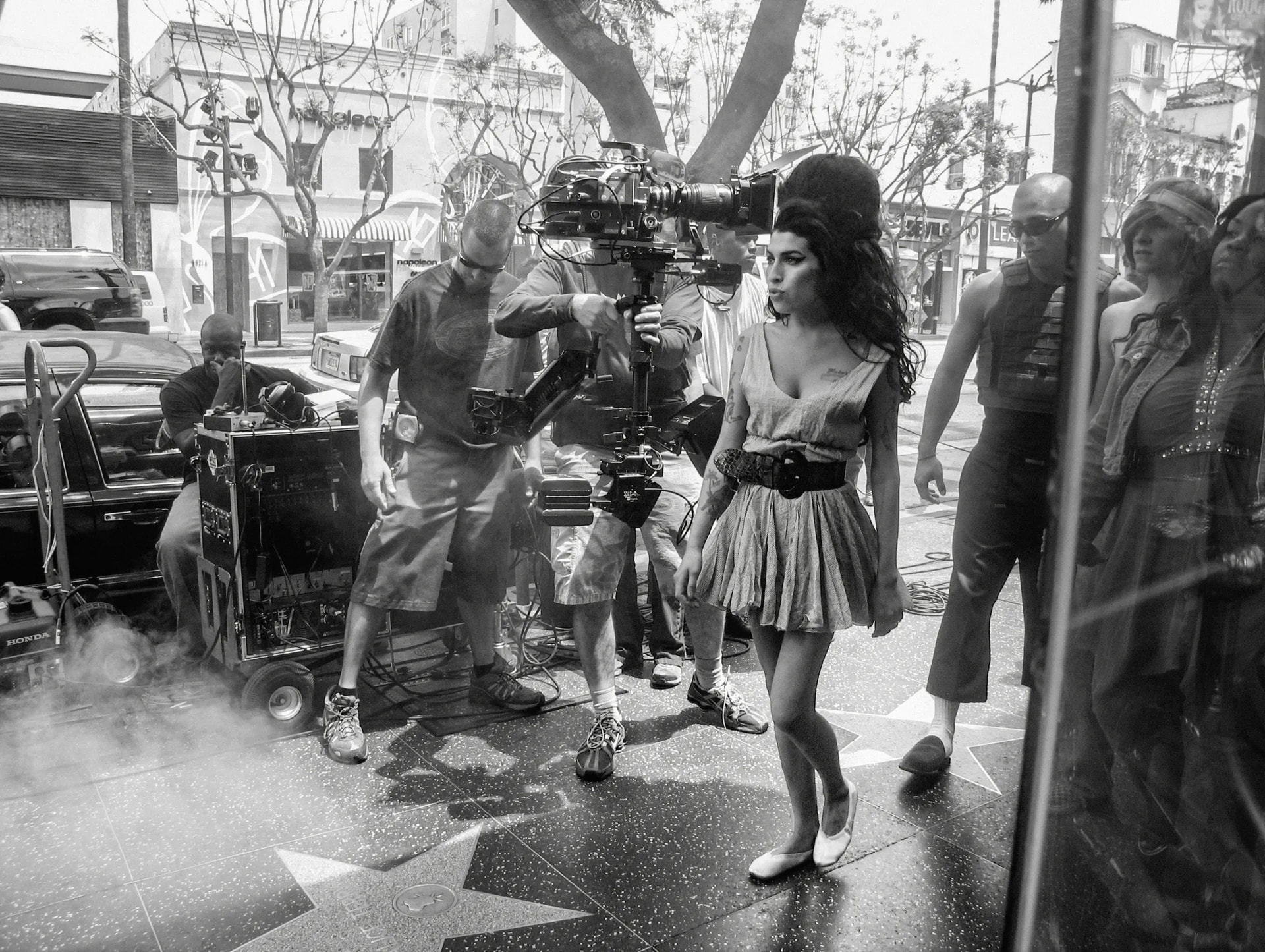
She was late, very late, and there was tension that’s now dissipated. I’m sitting with her in a trailer as Naomi, her stylist friend, helps her get ready.
“Where’s my baby?” she asks me. I tell her I saw Blake outside, filming. People come in and out, asking if she’s hungry, cold, does she need anything — coffee? She’s fine.
After this they’ll return to London and she’s looking forward to some of the music festivals. “I know Blake will have a good time.”
The press has been especially vigilant with documenting their good times. There’s an element of harassment. One tabloid published a front page photo, a close-up of a white substance on her nose.
“Yeah, that was silly. So obviously fake. I found it funny. You could see they got a photo and they put stuff on my nose.”
“You mean the photos were doctored?”
“Yeah, it was hilarious. It’s happened to friends of mine as well.”
“You don’t get angry?”
“Nothing you can do. Live and let live, you know what I mean?”
This unbothered attitude is either extremely Zen or a coping mechanism for what’s out of her control. Possibly both. Her issues with drug and alcohol abuse are of course well documented.
“When the cocaine pictures came out, my dad was really angry. He said, ‘This is horrible, how can they do this to you?’ and I was, like, ‘Dad, it happens to a lot of people — they’ll take a photo and make it look a certain way.’ He said he was going to ring this paper and that paper. I was, like, ‘It’s pointless.’ I said, ‘Dad, there’s nothing you can do.’ ”
The other man, apart from Blake, who dominates Amy’s story is Mitch. He received his London cab driver’s licence about five years ago. He looms large in her life but she says he’s not involved in her career at all.
She speaks to him quite often, she tells me. “Every four or five days.” They’re very protective of each other and also very similar. “Same outlook on life. I love my dad. Love him a lot.”
How else are you similar?
“He’s very matter-of-fact about things. Quite abrupt, I suppose.”
It’s increasingly hard to talk as people get busy around her, so I tell Amy I’ll wait outside. Someone mentions a Vogue shoot she has coming up. It’s flattering, right? Some people would feel that makes them special. Does that ever happen?
“No. I’m special because the man I’m in love with loves me too. I don’t feel ungrateful but I see through a lot of things and I think it’s a lot of bollocks.”
I asked Shane O’Neill whatever happened to the behind-the-scenes footage Blake took for Spin magazine that day? He laughed. Blake forgot to load film in the camera.
Amy and Blake divorced in July 2009. She died two years later, on July 23, 2011, in her flat in Camden, from an accidental alcohol overdose. She was 27.
I wonder where would she be now? She would be 43. Would she be in Las Vegas doing a residency like Adele? Would she be a recovering addict with years of sobriety? Would she be on social media? Or married in north London, performing at a local pub, cleaning her house, cooking for friends, taking care of her children? Most likely she’d still be writing songs.
When I listened to the tapes for the fourth time, it was the moments that weren’t the headlines that stood out. I recalled the moment she winked at the busboy when he passed by the table. Her offer to pick up the bill and when I told her I had it covered, her genuine surprise. “Are you sure? Thank you.”
I was struck too, by how often she repeated that she just wanted everyone to be happy. She would return back to that again and again. It punctuated every thought when she didn’t care to go deeper.
Her desire to take care of Blake seemed absolute, and she mentioned several times that she just wanted to look after him and protect him. She expressed so much love for him, for her friends, for her family, for everyone who was in her orbit. The only thing missing was love for herself.
A deluxe reissue of Back to Black is out on October 23. A concert celebrating 20 years of the album takes place at the Roundhouse, London NW1, on October 21